How to Choose Fishing Waders: Types, Materials, and Sizing
Updated October 2026 · 3 min read
Quick answer
Most anglers should buy breathable chest waders with stockingfeet and separate wading boots — comfortable in most seasons and safest in deeper water. Choose neoprene for very cold water, and bootfoot rubber or PVC waders if you want the lowest price and easiest on-and-off.
Waders keep you dry while you stand in rivers, lakes, and surf, so you can reach water you can't fish from the bank. The right pair depends on how deep you wade, how cold the water is, and how far you walk. Here is how to choose, step by step.
Step 1: How high? Hip, waist, or chest waders
| Type | Covers up to | Best for |
|---|---|---|
| Hip waders | Upper thigh | Small streams, shallow creeks, muddy banks |
| Waist waders | Waist | Knee- to thigh-deep water; cooler in hot weather |
| Chest waders | Chest | Most rivers, deeper wading, surf — the most versatile |
If you're not sure, choose chest waders. They cover the widest range of water, and many models can be folded down at the waist on hot days. Compare picks in best chest waders.
Step 2: Material — breathable, neoprene, or rubber
| Material | Pros | Cons | Best for |
|---|---|---|---|
| Breathable (laminated nylon) | Light, packable, lets sweat escape | Costs more; needs layers in cold water | Most fishing, spring to fall, long walks |
| Neoprene (3–5 mm) | Very warm, tough | Hot and sweaty in summer, heavy | Cold water, winter steelhead, duck hunting |
| Rubber / PVC | Cheapest, very durable, easy to clean | Doesn't breathe; hot and clammy | Short sessions, budget, muddy banks |
Breathable waders are the most popular choice because you can wear them most of the year — just add warm layers underneath when the water is cold. See best breathable waders, or best budget waders if price matters most.
Step 3: Bootfoot or stockingfoot
- Bootfoot waders have boots built in. They're quick to put on, usually cheaper, and great for short trips and muddy banks. The downside: less ankle support and a looser fit for walking over rocks.
- Stockingfoot waders have a neoprene sock, and you wear separate wading boots over them. They support your ankles, grip better, and are much more comfortable for long walks and rocky rivers.
If you wade rocky rivers or walk a lot, choose stockingfoot waders with good boots. See best wading boots.
Step 4: Felt or rubber soles
Felt soles grip slick, algae-covered rocks very well. But felt stays wet and can carry invasive species between rivers, so some states restrict or ban felt — check your local rules before you buy.
Rubber soles are allowed everywhere, work better on mud, snow, and trails, and dry fast. Many anglers add studs to rubber soles for extra grip on slippery rocks.
Step 5: Get the size right
Wader size charts use more than one number. Measure these before you order:
- Shoe size — with the socks you'll wear while wading.
- Inseam — from your crotch to the floor, without shoes.
- Chest — around the widest part, wearing the layers you'll fish in.
- Height and weight — many brands use these for short, regular, long, and king sizes.
For stockingfoot waders, many anglers buy wading boots one size larger than their shoe size to fit the neoprene sock. Check the boot maker's own advice.
Always wear a wading belt
A wading belt cinched around your waist slows water from rushing into your waders if you fall. Most chest waders include one — wear it every time. Shuffle your feet instead of taking big steps, face upstream in current, and consider a wading staff in fast water.
Make your waders last
- Rinse them with fresh water after use, especially after saltwater.
- Hang them upside down by the boots or feet to dry, out of direct sun.
- Patch small leaks early with a wader repair kit.
- Don't store them folded and damp — mildew and creases damage seams.
Ready to buy?
Our recommended guides
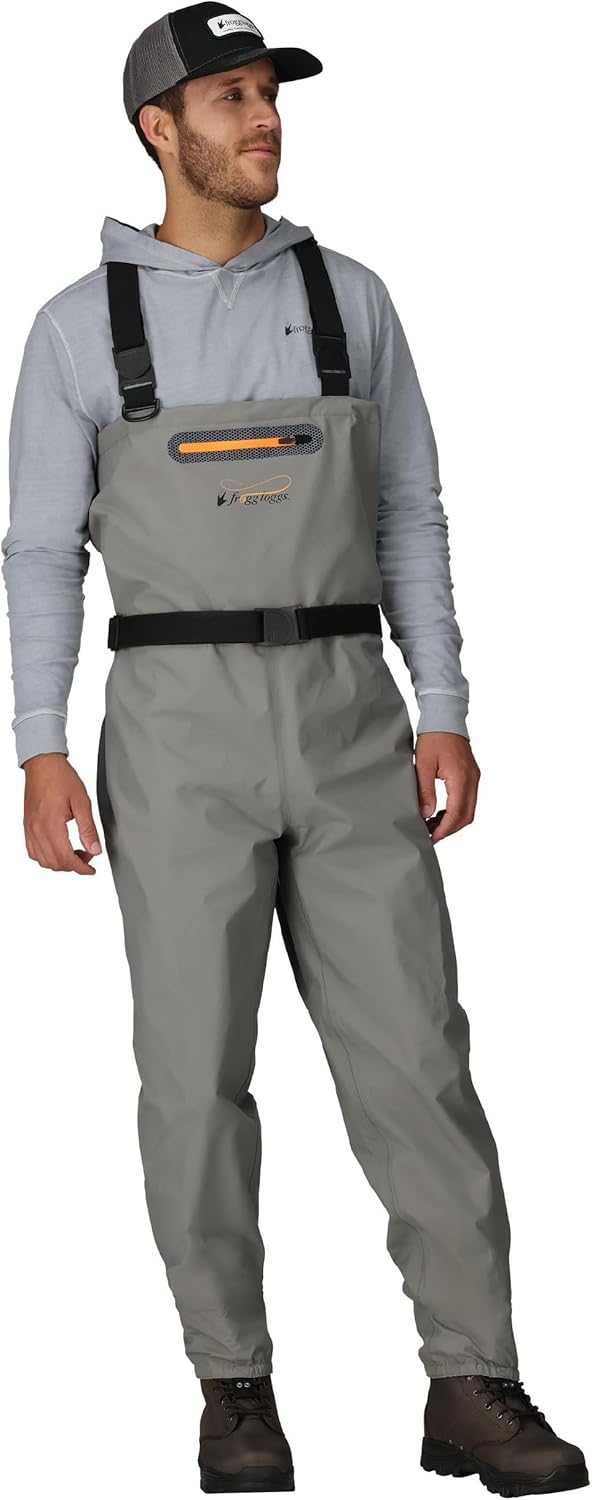 Best Fishing Waders
Our top waders and footwear across every style.
Our #1 pick: Frogg Toggs Canyon II Breathable Stockingfoot Chest Waders
 Best Breathable Waders
Comfortable waders for most seasons.
Our #1 pick: Simms Men's Tributary Stockingfoot Waders
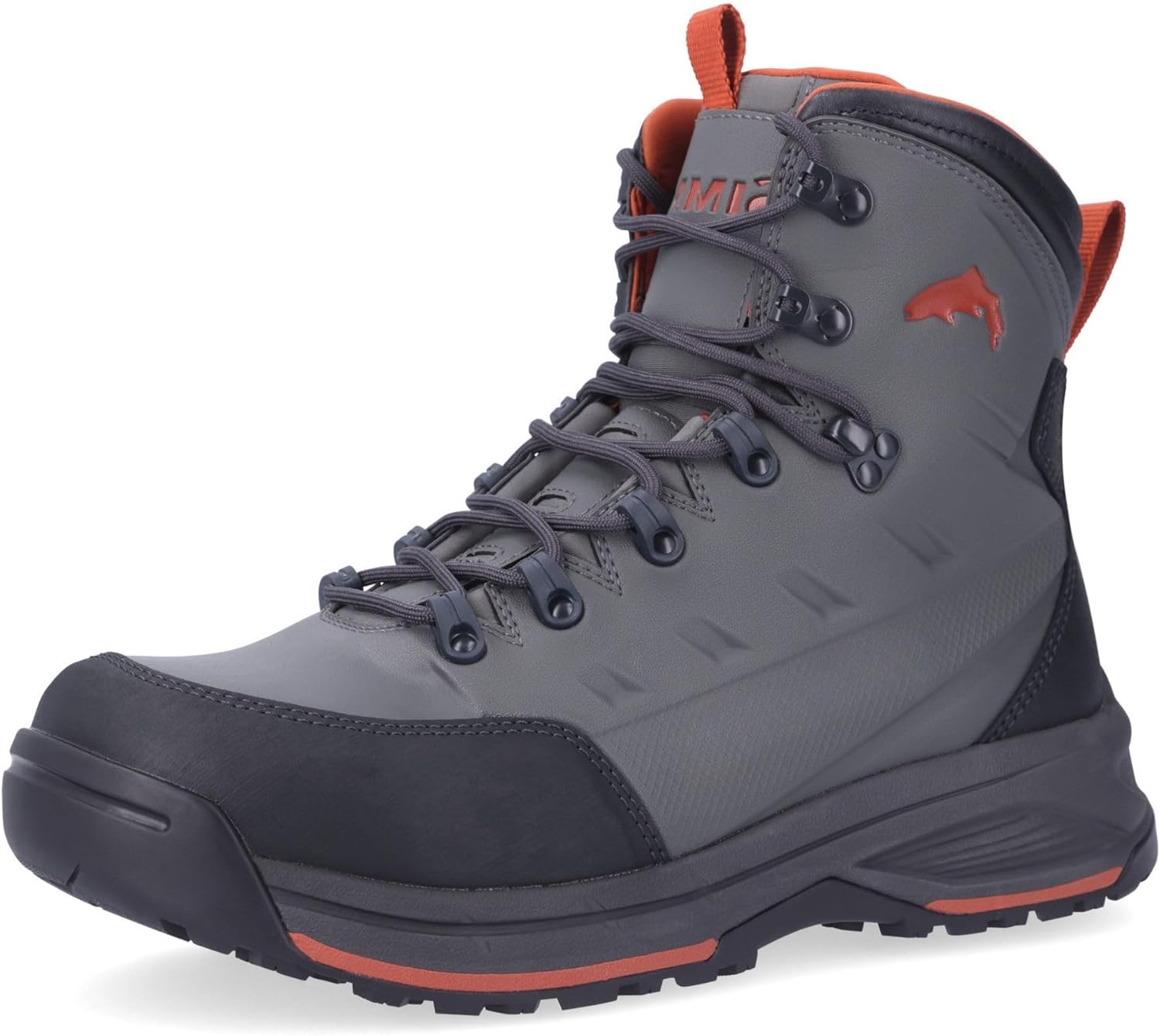 Best Wading Boots
Grip and ankle support for stockingfoot waders.
Our #1 pick: Simms Men's Freestone Wading Boot - Rubber
As an Amazon Associate we earn from qualifying purchases, at no extra cost to you. Disclosure
Frequently asked questions
What type of waders is best for beginners?
Breathable chest waders. They cover most water depths, stay comfortable in most seasons, and work with wading boots for better grip. If price matters most, bootfoot chest waders are a good start.
Are neoprene or breathable waders better?
Breathable waders are better for most fishing because they stay comfortable when you walk and sweat. Neoprene is better for very cold water and long periods of standing still.
Should wading boots be a size bigger?
Often yes, because they fit over the wader's neoprene sock. Many anglers go one size up, but check the boot maker's sizing advice.
Are felt-soled wading boots illegal?
Not everywhere, but some states restrict or ban felt soles to stop the spread of invasive species. Check your state's fishing rules before you buy.
Can you swim in waders?
Waders are not made for swimming. A cinched wading belt slows water from entering if you fall, which helps you get back up and out. Always wear one.