
Spinning vs Baitcasting Reels: Which Should You Buy?
Updated October 2026 · 3 min read
Quick answer
Buy a spinning reel if you are new to fishing or use light lures and line. Choose a baitcasting reel when you fish heavier lures, thick cover, or big fish and want more accuracy and power — after you have learned to control it.
Spinning and baitcasting reels both put line on the water, but they work very differently. One is forgiving and easy; the other is precise and powerful but takes practice. Here is how they compare, and how to pick the right one for the way you fish.
At a glance
| Spinning reel | Baitcasting reel | |
|---|---|---|
| Ease of use | Very easy — good for beginners | Takes practice |
| Tangles ("bird's nests") | Rare | Common while learning |
| Best lure weight | Light to medium | Medium to heavy |
| Best line | Light to medium line | Medium to heavy line |
| Casting accuracy | Good | Excellent once learned |
| Power for big fish | Good | Better |
| Position on rod | Hangs under the rod | Sits on top of the rod |
How a spinning reel works
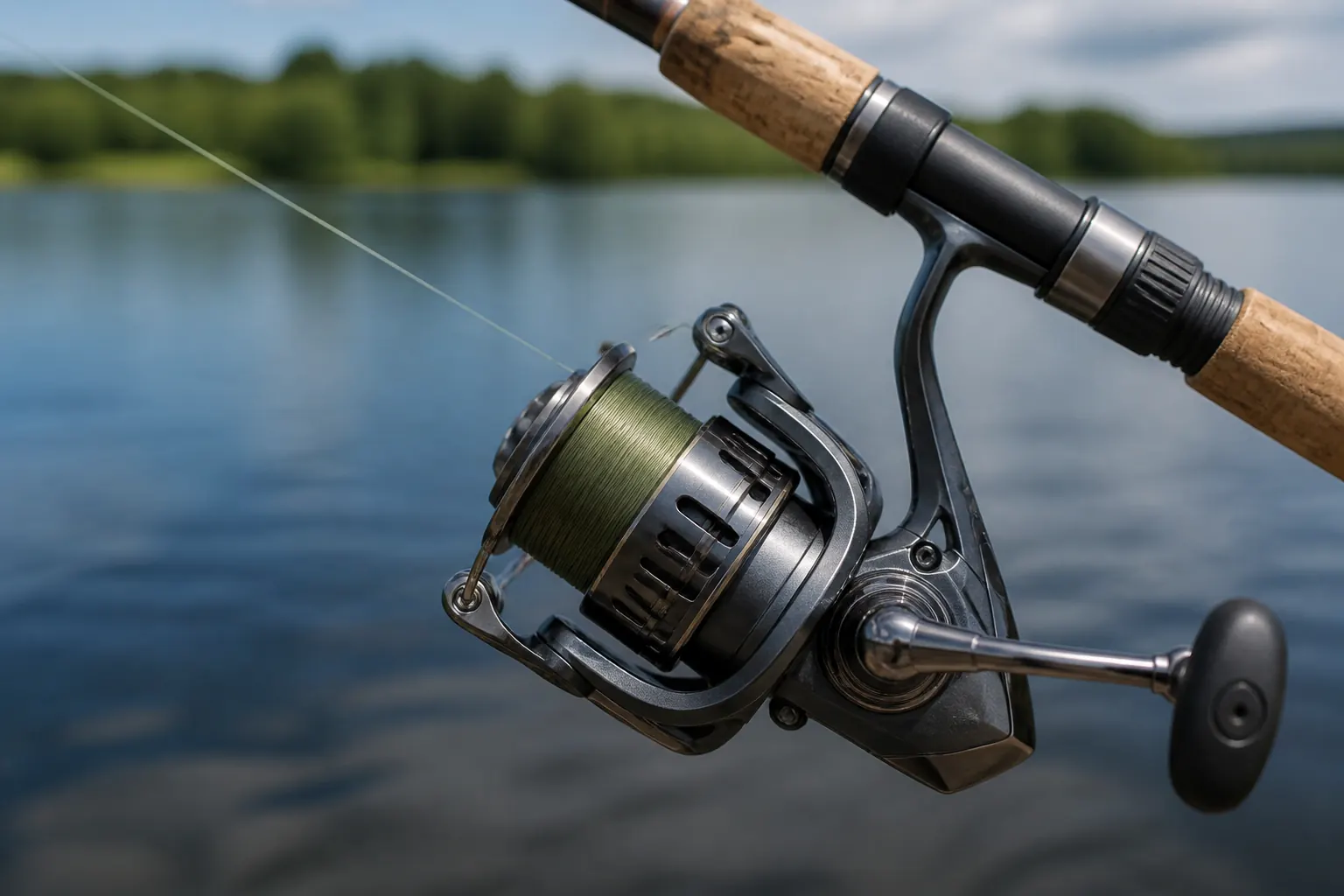
A spinning reel has a fixed spool: it does not turn when you cast. You open the metal arm (the bail), hold the line with one finger, and cast. The line simply slides off the front of the spool, which is why tangles are rare.
Because there's almost nothing to control, spinning reels shine with light lures and light line — small spinners, jigs, live bait under a bobber, and finesse soft plastics. They are the default choice for panfish, trout, walleye, and much of bass fishing.
- Pros: easy to learn, casts light baits well, few tangles, works for left- or right-handed anglers.
- Cons: line can twist over time, less accurate on long casts, not ideal for very heavy lures or line.
Compare picks in best spinning reels or budget spinning reels.
How a baitcasting reel works
On a baitcasting reel, the spool turns as the lure pulls line out during the cast. If the spool spins faster than the line leaves, the extra line loops over itself — the famous backlash or "bird's nest". You prevent this with your thumb on the spool and the reel's brake and spool-tension settings.
Once learned, that control is the baitcaster's strength. You can stop a lure right next to a dock post, cast heavy lures a long way, and use thick line and strong drag to pull big fish out of weeds and wood.
- Pros: pinpoint accuracy, handles heavy lures and line, more cranking power, less line twist.
- Cons: backlashes while learning, not great with very light lures, usually costs more.
Which one should you choose?
| If you… | Choose |
|---|---|
| Are new to fishing | Spinning |
| Fish for panfish, trout, or crappie | Spinning |
| Use light lures, finesse baits, or live bait | Spinning |
| Throw heavy lures like big crankbaits, swimbaits, or jigs | Baitcasting |
| Fish thick weeds, docks, or wood for bass | Baitcasting |
| Want one reel for everything | Spinning |
Many experienced bass anglers carry both: a spinning rod for light finesse baits and a baitcaster for heavy lures and cover.
What about spincast reels?
A spincast reel is the closed reel with a push button, common on kids' rods. It is the easiest of all to cast, but it holds less line and is weaker on bigger fish. It's a fine choice for young kids — see best spincast reels and kids combos.
Match the reel to the rod
Spinning reels go on spinning rods (large guides, reel seat underneath). Baitcasting reels go on casting rods (small guides, often a trigger grip). They are not interchangeable. If you are buying both at once, a rod and reel combo takes the guesswork out.
For spinning reels, size matters too: 1000–2500 for light freshwater, 2500–3000 for all-around and bass, 4000 and up for saltwater and big fish.
Ready to buy?
Our recommended guides
 Best Fishing Reels
Spinning, baitcasting, and saltwater reels compared.
Our #1 pick: Pflueger Supreme Spinning Reel
 Best Spinning Reels
The easiest reels to learn and use every day.
Our #1 pick: Pflueger President Spinning Reel
 Best Baitcasting Reels
For heavy lures, cover, and big bass.
Our #1 pick: Shimano SLX Baitcasting Reel
As an Amazon Associate we earn from qualifying purchases, at no extra cost to you. Disclosure
Frequently asked questions
Is a spinning reel or baitcaster better for beginners?
A spinning reel. It is easier to cast, rarely tangles, and handles the light lures and bait beginners usually use.
Why do baitcasting reels backlash?
The spool keeps spinning faster than the line leaves it, so extra line loops over itself. Setting the brakes and spool tension correctly and using your thumb on the spool prevents it.
Can I put a baitcasting reel on a spinning rod?
No. Baitcasting reels need a casting rod with guides on top of the blank and a matching reel seat. Spinning reels need a spinning rod with larger guides underneath.
Are baitcasting reels better for bass?
For heavy lures and fishing in thick cover, yes. For light finesse baits like drop shots and small soft plastics, spinning reels are usually better.
Are there left-handed baitcasting reels?
Yes. Baitcasters come in right- and left-hand retrieve. Most spinning reels let you switch the handle to either side.