
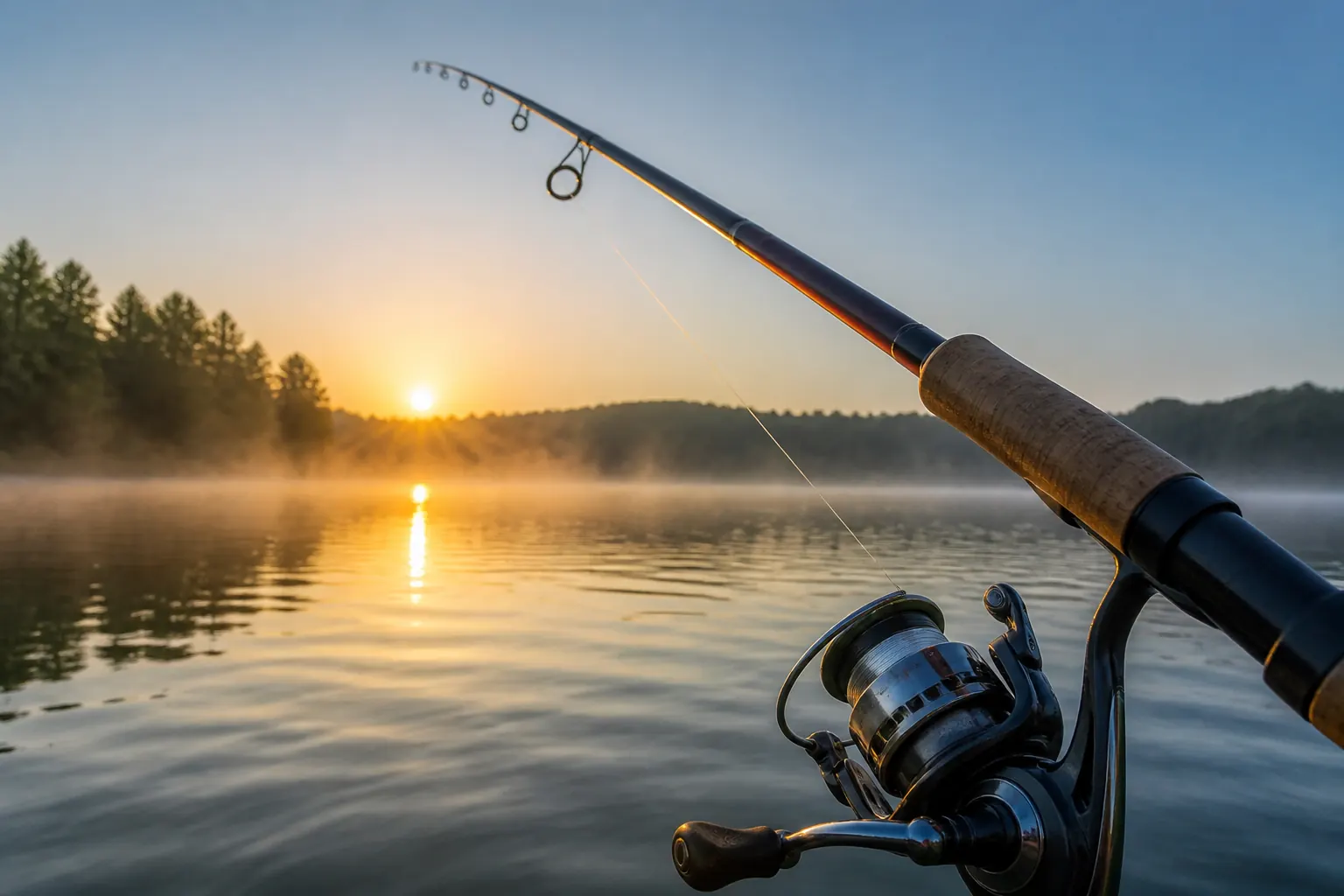
What Fishing Gear Do Beginners Need? A Simple Starter List
Updated October 2026 · 4 min read
Quick answer
A beginner needs a medium-power spinning rod and reel combo, 6–10 lb line, a small kit of hooks, sinkers, bobbers, and a few lures, a pair of fishing pliers, and a fishing license. Everything else can wait.
Walk into a tackle shop and it looks like you need hundreds of things. You don't. Most people catch their first fish with a simple setup that fits in one small box. This guide lists what to buy first, what each item does, and what you can safely skip until you know how you like to fish.
The short list
If you only read one part of this page, read this. These items cover almost every kind of freshwater fishing from a bank, dock, or small boat:
- A spinning rod and reel combo — 6'6" to 7', medium power. See our beginner combo picks.
- Fishing line — 6–10 lb monofilament. Many combos come with line already on the reel.
- Terminal tackle — a few sizes of hooks, split-shot sinkers, and bobbers.
- A handful of lures — an inline spinner, a soft plastic worm, and a small crankbait.
- Fishing pliers — to remove hooks safely and cut line.
- A small tackle box — to keep it all organized.
- A fishing license — required for adults almost everywhere in the US.
1. A rod and reel: start with a spinning combo
A spinning reel is the easiest reel to learn. It hangs under the rod, it almost never tangles the way a baitcasting reel can, and it casts light baits well. Buying the rod and reel together as a combo saves money and makes sure the two are matched.
Look for a rod around 6'6" to 7' long with medium power and fast action. That one rod can catch panfish, trout, bass, and catfish. A reel in the 2500 size is the right partner for it.
Compare ready-to-fish setups in our best rod and reel combos guide, or see budget combos if you want to spend as little as possible.
2. Fishing line: 6–10 lb monofilament
Monofilament is the best line for beginners. It is cheap, easy to tie knots in, and forgiving because it stretches a little when a fish pulls. For general freshwater fishing, 6 to 10 lb test works well.
If your combo came with line, use it. When you replace it, read what size fishing line to use and braid vs mono vs fluorocarbon before you buy.
3. Hooks, sinkers, and bobbers
These small parts are called terminal tackle, and they are how you fish with live bait like worms or minnows — still the easiest way to catch your first fish.
- Hooks: a pack of assorted sizes. Sizes 6 to 10 suit panfish and trout; sizes 1 to 2 suit bass and catfish. (With hooks, a bigger number means a smaller hook.)
- Split-shot sinkers: small weights you pinch onto the line to get bait down.
- Bobbers (floats): they hold your bait at a set depth and dip under when a fish bites.
See our fishing hooks and weights and sinkers guides for good starter kits.
4. Three lures that catch almost anything
You don't need a box full of lures. Three proven types cover most situations:
| Lure | Why it works | Good for |
|---|---|---|
| Inline spinner | Just cast and reel — the blade flashes and vibrates | Trout, bass, panfish |
| Soft plastic worm | Slow, natural movement; very cheap | Bass |
| Small crankbait | Dives and wobbles on a steady retrieve | Bass, walleye, pike |
See best fishing lures, or the bass lures and trout lures guides if you know what you want to catch.
5. Pliers, a tackle box, and a net
Fishing pliers are the one tool every angler should carry. They remove deep hooks safely — for you and the fish — and most have a line cutter built in. Compare options in best fishing pliers.
A small tackle box keeps hooks and lures from turning into a tangled mess. See our budget tackle boxes.
A landing net is optional when you start, but it helps you land bigger fish without breaking the line. See best fishing nets.
6. Don't forget a fishing license
In the US, adults need a fishing license in almost every state. Kids are usually exempt up to a certain age, and many states have free fishing days each year. Buy one on your state wildlife agency's website — it usually takes a few minutes. Also check the local rules for size limits, bag limits, and seasons.
What you can skip for now
- Fish finders — useful on a boat, not needed from the bank.
- Expensive rods and reels — a mid-priced combo catches the same fish while you learn.
- Waders — only needed if you plan to stand in rivers.
- Huge lure kits — most of the lures go unused. Buy a few you trust instead.
How much does a beginner setup cost?
Prices change, so check today's prices on each guide. As a rough idea, a full beginner setup — combo, line, terminal tackle, a few lures, pliers, and a small box — usually costs less than one mid-range reel on its own. The rod and reel combo is the biggest part of the cost; everything else is small.
Ready to buy?
Our recommended guides
 Best Beginner Combos
The easiest way to start: a matched rod and reel in one box.
Our #1 pick: Ugly Stik GX2 Spinning Combo (6')
 Best Fishing Pliers
The one tool every angler should carry.
Our #1 pick: KastKing Speed Demon Pro Fishing Pliers
 Best Fishing Lures
Proven lures for bass, trout, and saltwater.
Our #1 pick: TOPFORT Fishing Accessories Kit
As an Amazon Associate we earn from qualifying purchases, at no extra cost to you. Disclosure
Frequently asked questions
What is the easiest fish for a beginner to catch?
Panfish such as bluegill and sunfish. They live in most lakes and ponds, stay near shore, and bite readily on a small hook with a piece of worm under a bobber.
Should a beginner buy a spinning or baitcasting reel?
Spinning. It is easier to cast, rarely tangles, and handles light baits well. Baitcasting reels are better learned later, once you are comfortable casting.
What pound line should a beginner use?
6 to 10 lb monofilament covers most freshwater fishing. Go lighter (4–6 lb) for small trout and panfish, and heavier (10–12 lb) for bass around weeds and cover.
Do I need a fishing license?
In almost every US state, adults need a license to fish. Kids are usually exempt up to a certain age. Check your state wildlife agency's website for the exact rules.
Is a rod and reel combo good enough?
Yes. A good combo is matched by the maker and is ready to fish. Many anglers use the same combo for years before they want something more specialized.