
Sleeping Bag Temperature Ratings Explained (Comfort vs Limit)
Updated October 2026 · 3 min read
Quick answer
Look at the comfort rating, not the big number on the label. Choose a bag whose comfort rating is about 10°F colder than the coldest night you expect, and pair it with a sleeping pad that has a high enough R-value for the ground temperature.
A "20°F sleeping bag" doesn't mean you'll be comfortable at 20°F. Most bags are named after a survival-type number, and how warm you sleep also depends on your pad, clothing, and body. Here's how to read the ratings and choose a bag that actually keeps you warm.
The three temperature ratings
Many bags are tested with a standard lab method (ISO 23537, which replaced the older EN 13537). It gives up to three numbers:
| Rating | What it means | Who it fits |
|---|---|---|
| Comfort | A relaxed sleeper stays comfortable lying on their back | Cold sleepers — the best number to plan with |
| Limit (lower limit) | A sleeper stays warm curled up for about 8 hours | Warm sleepers |
| Extreme | Survival only — risk of hypothermia | Emergencies; don't plan with it |
How to pick the right rating
- Find the coldest expected low where you'll camp — check the campground forecast, not the nearest town.
- Choose a bag with a comfort rating about 10°F colder than that low.
- If you sleep cold, use the comfort rating. If you sleep warm, the limit rating may be enough.
- Pair it with the right sleeping pad (see below).
| Season | Typical bag rating | See |
|---|---|---|
| Summer | 35°F and warmer | Lightweight bags |
| Three-season | 15°F to 35°F | Most camping bags |
| Winter | 15°F and colder | Cold-weather bags |
Compare picks in best sleeping bags, cold-weather sleeping bags, and lightweight sleeping bags.
Your sleeping pad matters just as much
Your body crushes the insulation under you, so the bag can't keep the ground's cold away. That's the pad's job. Pad warmth is measured by R-value — higher is warmer, and pads tested to the ASTM F3340 standard can be compared fairly.
| R-value | Use |
|---|---|
| 1–2 | Warm summer nights |
| 2–4 | Three-season camping |
| 4–5.5 | Cold nights and shoulder seasons |
| 5.5 and up | Winter and snow camping |
Stacking two pads adds their R-values together. See best sleeping pads and self-inflating pads. Air mattresses without insulation can feel very cold — add a blanket or foam pad underneath.
Other things that change how warm you sleep
- Your body: people who sleep cold may need a bag 10°F warmer than average.
- Food and water: eating a snack with fat before bed helps your body make heat; being dehydrated makes you colder.
- Clothing: dry base layers, socks, and a warm hat add warmth. Damp clothes take it away.
- Shelter and wind: a tent adds a few degrees and blocks wind.
- Bag fit: too big leaves cold air pockets; too tight crushes the insulation.
More tips in how to stay warm while camping.
Down vs synthetic, and bag shapes
- Down: warmest for its weight and packs small, but loses warmth when wet (treated down helps). Best for backpacking.
- Synthetic: cheaper and keeps some warmth when damp, but heavier and bulkier. Great for car camping and wet climates.
- Mummy shape: tapered and warmest, with a hood.
- Rectangular: roomiest, can often unzip into a blanket — best for warm-weather car camping. See double sleeping bags for couples.
Ready to buy?
Our recommended guides
 Best Sleeping Bags
Our top bags for most camping trips.
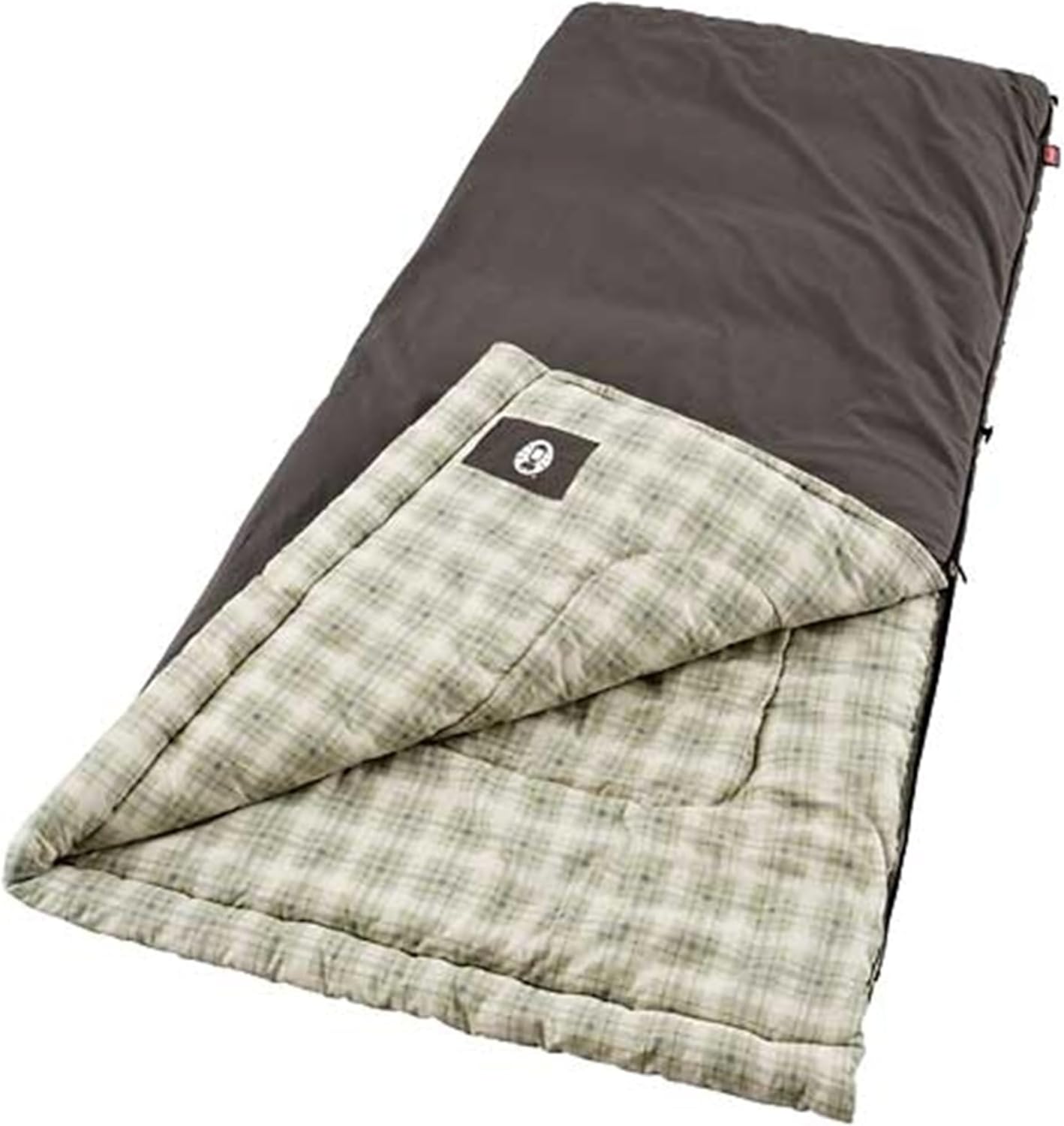
Our #1 pick: Coleman Heritage Big & Tall 10°F Flannel Sleeping Bag
 Best Cold-Weather Bags
Warm bags for frosty nights and winter.
Our #1 pick: Coleman North Rim 0°F Mummy Sleeping Bag
 Best Sleeping Pads
Insulation from the cold ground.
Our #1 pick: TREKOLOGY UL80 Ultralight Sleeping Pad
As an Amazon Associate we earn from qualifying purchases, at no extra cost to you. Disclosure
Frequently asked questions
Is a 30-degree sleeping bag warm enough?
It depends on which rating 30°F is. If it's the limit rating, expect comfort only down to around 40°F for many sleepers. For nights near freezing, choose a bag with a comfort rating of about 20°F.
What does the comfort rating mean?
The temperature at which a typical relaxed sleeper stays comfortable lying on their back. It's the best number to plan with, especially if you sleep cold.
Why am I cold in my sleeping bag?
The most common causes are a thin pad, a bag rated too warm for the night, damp clothing, or going to bed cold and hungry. Fix the pad first — the ground pulls heat away fast.
Are women's sleeping bags warmer?
Many women's-specific bags add insulation at the feet and torso and are shaped differently, because many women sleep colder. Compare comfort ratings to see the difference.
Should I sleep in clothes in a sleeping bag?
Wearing a dry, light base layer, socks, and a hat helps. Avoid wearing the damp clothes you wore during the day, and don't bundle up so much that you compress the bag's insulation.